
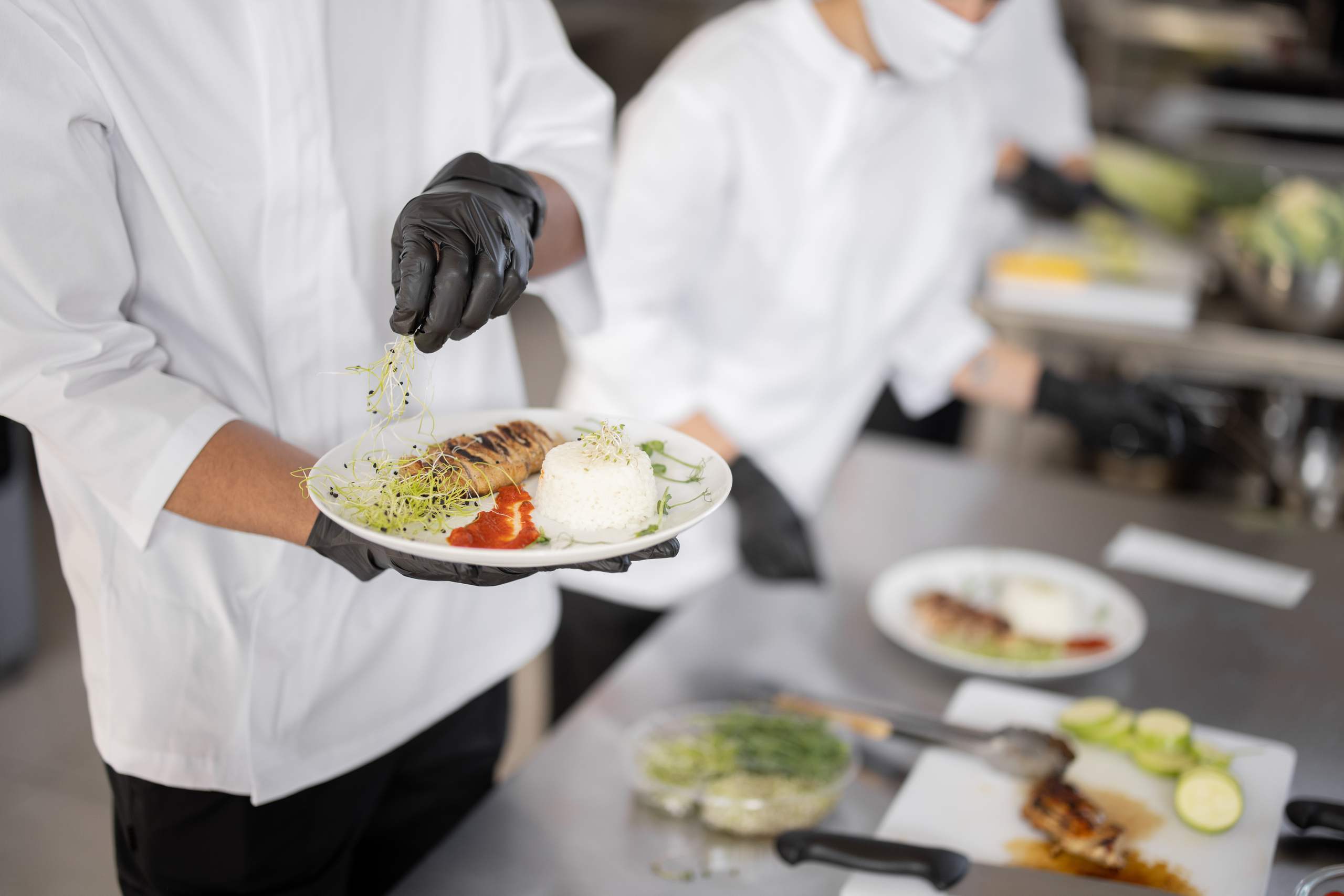
On surface level, a busy restaurant is a sort of controlled chaos: moving fast, food flying from the floor to the kitchen, people waiting, staff being multi-functional, etc. But a well-executed service is never chaos. It’s coordination. Behind that smooth operation lies a team-based system that relies on the interaction of teamwork, communication, and time coordination in high-pressure times.
Learning how to coordinate a restaurant service is perhaps one of the most critical elements of restaurant service training. It’s what determines why some teams function effortlessly even in times of high-volume business while some other teams find difficulty in dealing with the same volume of business.
The Restaurant is a Chain, Not a Collection of Roles
In the professional restaurant service, there’s such a thing as individual role in the chain, from servers, bartenders, kitchen personnel to floor managers. Each one of them is a link in the chain. Their actions will affect the next link.
Should any link of the chain stop or malfunction in one way or another, the rest of the process will also be affected. That’s why most restaurants focus more on coordination of the process rather than the performance of individuals in the restaurant. Team strength is much more important than individual strength.
Clear Roles Reduce the Stress in Times of High Volume
When the restaurant is busy, the first thing to become chaotic is the clarity of responsibilities. There are instances when roles overlap, some are not being covered at all, or processes aren’t followed, among other things.
Organized teams usually give clear instructions on what are the roles and responsibilities of everyone, so everyone is aware of who does what. This reduces any confusion and stress, as people know exactly what they have to do instead of trying to decide the next actions.
This clarity of roles becomes a stable system, especially in the peak hours where everything needs to be quick and accurate.
Communication Has to be Short and Easy
In high-paced environments, no one has time for long explanations or unclear instructions. The language has to be simple, brief, and easy to understand.
Professional teams are taught simple words, gestures or rituals for faster understanding and no need for constant explanations. This allows for more accuracy and smooth operation.
The best restaurant communication is usually simple communication. And it’s always the most consistent one.
Time is the Main Ingredient
Even when there are clear roles and good communication, the quality of service still depends on when everything is done. The timing of dishes and when the tables are attended makes all the difference.
Good timing separates average restaurant service from good one. It requires attention to everything, not just to one’s immediate tasks. Good timing is learned by experience.
High Pressure Reveals Real Quality of Teams
There are moments when restaurant pressure is a challenge, it is also a test. It can prove how trained the team is, if they can communicate clearly and how they coordinate everything together.
Good teams usually focus themselves in times of high pressure, but bad teams will end up falling apart and in confusion. That’s why restaurant service training is essential.
A good team never runs away from pressure. They only know how to work within pressure.
Final Thoughts
What makes restaurant service smooth isn’t about working faster or harder, but about working together as a team with coordination.
Clear communication, good timing, and well-defined roles allow any high-pressure service to work with order and efficiency. And this is why it’s called “professional” service, it’s not about having no pressure, it’s about working well within pressure.